Serra Mesa Home Prices: Why Similar Homes Vary
August 13, 2026
August 13, 2026
Serra Mesa gets described online as one thing: a centrally located, mid-century neighborhood in the geographic middle of San Diego. That description is accurate and mostly useless for a buyer trying to figure out what a specific house is actually worth. Two homes built the same year, on the same size lot, with the same square footage, can sell for noticeably different prices in Serra Mesa, and the gap has almost nothing to do with the numbers a portal shows you.
It comes down to three things: which of the neighborhood's original subdivisions the home sits in, whether the lot faces a freeway or a canyon, and whether the house has been renovated or still shows its 1958 bones. None of those show up in a square-footage comparison. All three show up in the sale price.
Serra Mesa is not one tract. It is a collection of smaller developments, built by different builders across the 1950s and into the early 1960s, stitched together on a mesa between what is now Interstate 805, Interstate 15, and Aero Drive. Land was cheap after the Korean War, the Navy built its Cabrillo Heights housing project in the early 1950s, and freeway construction plus imported water opened the rest of the mesa to fast, uncoordinated tract building. Today the wider community holds roughly 24,000 residents across a bit more than 8,300 housing units, most of them still single-family.
That history is why locals still argue about boundaries. Mission Village runs along the east side of Sandrock Road and gets subdivided further into clusters labeled by roman numeral, tied to the specific builder and year. Princess Park Estates sits on both sides of 805. Murray Ridge Estates sits east of 805 and west of Rancho Cabrillo. Stonecrest Village was platted in the 1970s but not actually built out until the late 1990s, giving it a noticeably newer housing stock than the rest of the neighborhood. Birdland, laid out with streets named after birds, sits across the freeway and a canyon from the rest of Serra Mesa, and residents there will tell you plainly that it doesn't feel like the same place.
None of these distinctions show up on a Zillow map pin. They show up in the sale.
Serra Mesa is bordered by three freeways: I-15, I-805, and State Route 163, with I-8 and 52 close by. That access is the neighborhood's main selling point and its main complication. Homes that back directly to one of those freeways, or to a busy connector street, carry real traffic noise, even with sound walls in place. Homes a few streets over, closer to Ruffin Canyon or Sandrock Canyon, get a genuinely different experience: quieter blocks, canyon views, and in some pockets a natural cooling effect from the mesa's elevation.
The same split shows up near Montgomery-Gibbs Executive Airport, which handles roughly 200,000 takeoffs and landings a year, mostly small private aircraft and flight school trainers. Homes directly under the flight path near Aero Drive hear engine noise regularly. Homes farther south, toward Murray Ridge Road, largely don't.
Here's roughly how that geography sorts across a few of the named subdivisions:
| Subdivision | General position | What it means for a buyer |
|---|---|---|
| Mission Village | East side of Sandrock Road, canyon-adjacent in parts | Quieter interior streets, some direct canyon backyards |
| Princess Park Estates | Straddles I-805 | Mixed exposure depending on which side of the freeway |
| Murray Ridge Estates | East of 805, west of Rancho Cabrillo | Farther from the Aero Drive flight path, generally quieter |
| Birdland | West of I-805, east of SR-163, separated by freeway and canyon | Functionally its own micro-market, physically cut off from the rest of Serra Mesa |
| Stonecrest Village | West of I-15, above the canyons | Newer housing stock (1990s build-out) inside an otherwise 1950s-60s neighborhood |
A buyer comparing two "Serra Mesa" listings without knowing which row they fall into is comparing two different products with the same label.
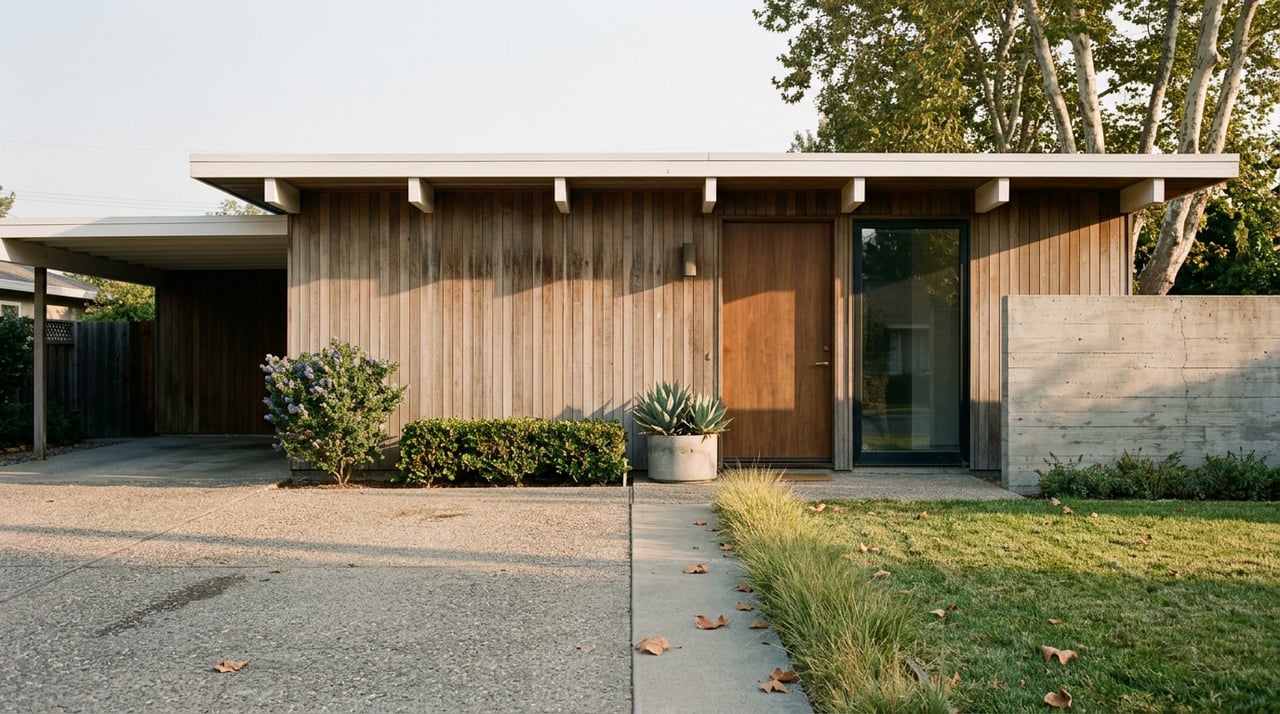
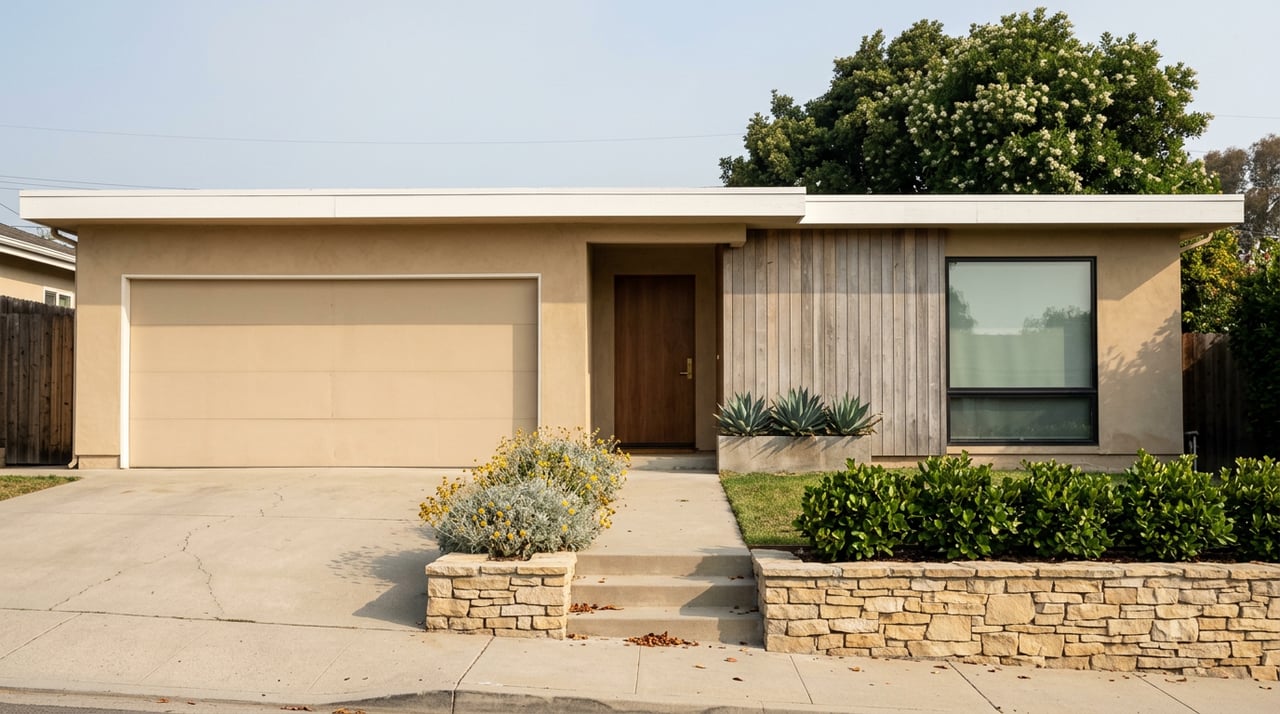
The neighborhood's housing stock is genuinely architecturally interesting, which is easy to miss under the word "postwar." Serra Mesa is one of the higher-concentration pockets of original San Diego mid-century modern design, alongside Clairemont and Bay Park. Some of that stock traces to a specific, documented source: architects Henry Hester and Robert Jones, working as Hester, Jones & Associates, sold post-and-beam design variants to the American Housing Guild in the early 1960s under a design later recognized by the San Diego chapter of the AIA as the "Subdivision House." Examples of that same builder relationship can still be found on streets like Ainsley Road in the Serra Mesa and Mission Village area, alongside similar tracts in San Carlos and Clairemont.
That pedigree matters at resale, but only when the house has been kept up or thoughtfully updated. A renovated mid-century home in Serra Mesa, one with an updated kitchen, restored post-and-beam lines, and modern systems, tends to sell at a real premium over the neighborhood median. Original-condition homes from the same era, with original electrical or unmodified floor plans, sell for meaningfully less and function as the entry point for buyers willing to put in the work.
On the same block, in the same tract, a renovated 1958 post-and-beam home and its unrenovated neighbor are not competing for the same buyer, and they should not be priced as if they are.
Pull up Serra Mesa on different sites this year and you won't get one "typical home price." You'll get several, and none of them are wrong. They're measuring different slices of the same uneven map.
NeighborhoodScout's most recent neighborhood profile, updated in March 2026, puts the median real estate price at $952,152. Redfin's latest tracker shows an average home price of $980,000, up 4.8% year over year. A separate trailing twelve-month sale-price median lands at $955,000, down 4% from the prior twelve months. Then look at what's actually sitting on the market rather than what has closed: in January 2026, active listings in Serra Mesa carried a median list price of just $719,000, down 16% from December 2025.
That last figure isn't a sign of a crash. It's a list-price snapshot of whatever happened to be for sale that month, and in a neighborhood where original-condition ranch homes and fully renovated post-and-beam remodels get folded into the same feed, a month heavy on unrenovated listings will drag the list median down even while sold prices for updated homes near the canyons keep climbing. Different measurement, different month, different mix of tracts, different number. None of these figures tell you what a specific renovated house on a quiet Murray Ridge Estates street is worth, or what an original-condition home backing to SR-163 will actually fetch.
If you're comparing homes here, treat the neighborhood median as a starting point, not an answer. A few steps make the difference between shopping blind and shopping with real information:
Is Serra Mesa really one neighborhood, or several? Officially it's one community planning area, but residents draw real internal lines. Mission Village, Birdland, and Stonecrest Village are all part of the broader Serra Mesa area, and locals will tell you they don't function the same way day to day, largely because of the freeways and canyons that physically separate them.
Are all the homes the same mid-century style? Most of the original housing stock is single-level, ranch-influenced, and built between the late 1950s and early 1960s, but the degree of post-and-beam detailing, glass, and open planning varies by builder and tract. Some carry a documented design pedigree tied to specific mid-century architects. Others are simpler production builds from the same era. A home's tract history is a reasonable first clue to which one you're looking at.
If you're weighing a purchase or a sale in Serra Mesa and want the tract-by-tract, street-by-street read rather than the countywide average, that's the kind of comparison our team pulls before we ever talk price. The Jim Bottrell Team tracks these micro-markets across San Diego County, not just the headline number. Start with a free home valuation and we'll show you where your specific block actually sits.
Stay up to date on the latest real estate trends.


We pride ourselves in providing personalized solutions that bring our clients closer to their dream properties and enhance their long-term wealth. Contact us today to find out how we can be of assistance to you!