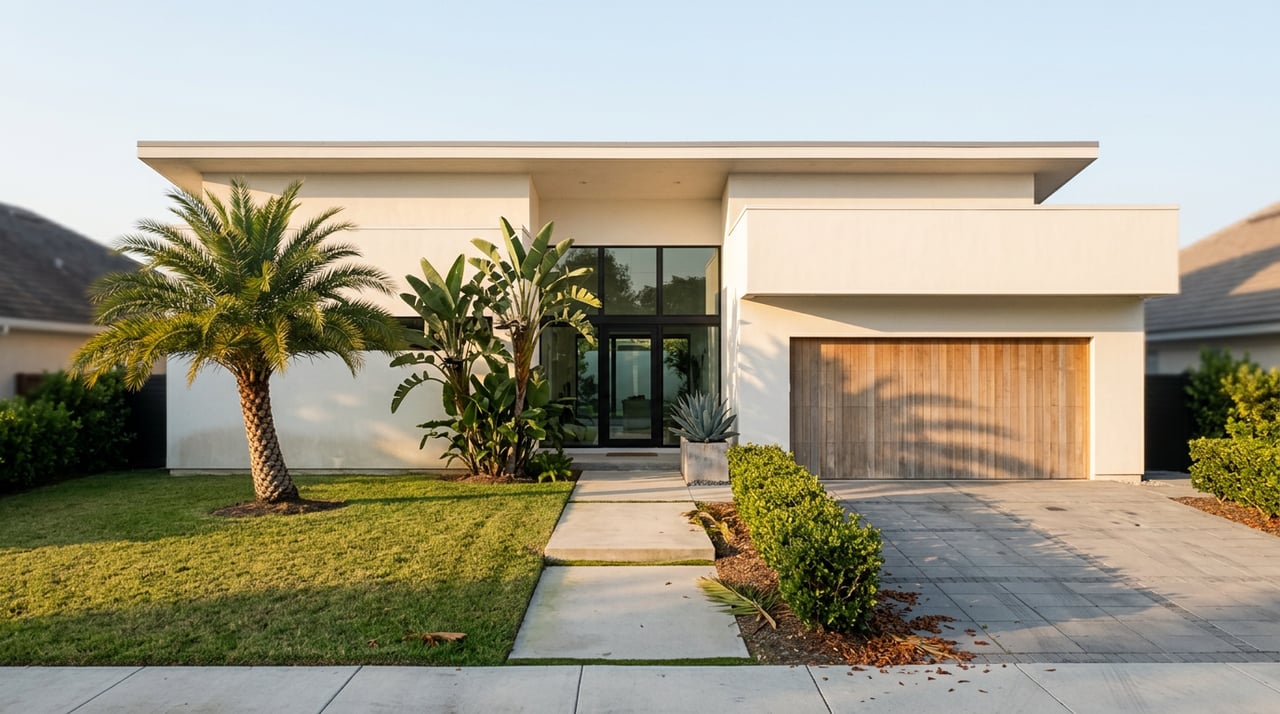
Mello-Roos in Carlsbad: What Buyers Should Verify
September 3, 2026
September 3, 2026
Walk into an open house in Bressi Ranch or La Costa Oaks and somewhere on the flyer, usually near the bottom in smaller type, you'll find a line that reads something like "Mello-Roos: approx. $X,XXX/yr, buyer to verify." Most buyers skim past it the way they skim past the square footage disclaimer. It looks like a fact. It is closer to a placeholder.
That single line is the most consequential piece of paperwork in a Carlsbad transaction that almost nobody reads carefully before they fall for a house, and the gap between what it says and what a buyer actually ends up owing is the real story behind Carlsbad's newer neighborhoods.
JVM Lending describes Mello-Roos as a special tax created under a 1982 state law that lets cities and school districts form a Community Facilities District, or CFD, to fund infrastructure. The California State Board of Equalization explains that Proposition 13 sets a standard 1% property tax rate, with special assessments shown separately on the county tax bill. McCoy & Obermueller describe Mello-Roos as a lien against the property rather than the owner, so the tax stays with the parcel for whoever buys it next.
California law requires sellers to disclose known special assessments, and the CFD line typically lands in the Transfer Disclosure Statement. But the dollar figure a listing agent writes on MLS is frequently pulled from the seller's most recent bill or a rough estimate, not a verified current figure. The only way to know the actual current amount and how long it runs is to pull it directly, either through the county tax collector's parcel lookup or by requesting the CFD's Rate and Method of Apportionment and current levy schedule from the title company or the district administrator. That verification needs to happen before contingencies come off, not after.
The City of Carlsbad maintains its own public page listing every active Community Facilities District inside city limits, including CFD No. 1, CFD No. 2, and CFD No. 3, which is split into two improvement areas. According to the district's own debt service schedule, CFD No. 3 Improvement Area 2 carries bond payments running from 2008 through 2038. A buyer purchasing into that district today isn't looking at a short-term charge. They're looking at more than a decade of remaining payments on a bond that was structured before most of them were house hunting.
Here's the part that actually matters for someone comparing two Carlsbad listings at the same price: whether a home carries Mello-Roos has almost nothing to do with the home itself and everything to do with when the surrounding infrastructure was built. Neighborhoods that predate the 1982 Act, largely the older coastal core around Carlsbad Village and Olde Carlsbad, generally carry no CFD at all, because the roads, sewer lines, and parks were already in the ground before the financing tool existed. The master-planned communities built afterward, Bressi Ranch, La Costa Oaks, Robertson Ranch, and portions of Aviara and Poinsettia, financed their infrastructure through exactly this mechanism, which is why the tax line follows those specific tracts and not others just a few miles away.
That split shows up in the effective tax rate a buyer actually carries. Homes outside a CFD in San Diego County typically run an effective property tax rate in the 1.1% to 1.3% range. Add a CFD assessment and that effective rate in Carlsbad's newer districts can climb toward 1.5% to 1.9% of the purchase price, depending on the specific community and levy formula. On a home priced in the high six figures to low seven figures, which is where much of Carlsbad sits, that spread is not a rounding error. It's a real, recurring monthly number that a lender will count against debt-to-income the same way it counts a mortgage payment.
| Carlsbad area type | Typical CFD status | Approximate effective tax rate |
|---|---|---|
| Older coastal core (Village, Olde Carlsbad) | Generally none, built before 1982 Act | ~1.1% to 1.3% |
| Newer master-planned tracts (Bressi Ranch, La Costa Oaks, Robertson Ranch, parts of Aviara/Poinsettia) | Active CFD, financed post-development | ~1.5% to 1.9% |
Here's the mechanism most buyers miss entirely, and it's the reason this deserves more attention than a single disclosure paragraph. Mello-Roos is not a percentage of what you paid for the house. It's a fixed dollar figure set by the CFD's own formula, based on things like lot size and square footage, As a share of the purchase price and as a share of monthly income, a given dollar charge is a heavier lift for the smaller purchase.
This is exactly why the number can't be treated as an afterthought during underwriting. Fannie Mae's Selling Guide includes special assessments in monthly housing expenses used to calculate debt-to-income, and a buyer who assumed a rough number from a listing sheet can find their approved loan amount shifts once the real figure is confirmed. According to lending industry guidance published in 2026, typical Mello-Roos amounts in California range from a few hundred dollars a year in smaller, older districts to more than $10,000 annually in larger, newer developments in high-growth areas, which is a wide enough range that guessing is not a strategy.
If you're under contract on a Carlsbad home in a newer tract, or about to write an offer, this is the sequence worth running before your inspection period closes:
None of this is complicated. It's just easy to skip when you're mid-tour, comparing finishes and school boundaries, and the tax line feels like fine print rather than a live number.
Carlsbad's market over the three months ending in June 2026 produced a median sale price of about $1.6 million, with homes typically going under contract in roughly 26 days. That pace matters here specifically because a fast-moving market punishes buyers who plan to sort out the CFD question after they've already removed contingencies. If two homes are priced similarly, one in an older CFD-free pocket and one in a newer district still years from paying off its bonds, the sticker price tells you almost nothing about which one actually costs less to carry every month. The only way to know is to run the numbers on the specific parcel, not the neighborhood average, before you're locked in.
This is the kind of verification that's easy to delegate to nobody in particular during a fast transaction. It shouldn't be. It's a five-minute parcel lookup that changes what "the same price" actually means.
Does Mello-Roos ever go away? Yes, once the underlying bonds are paid off, though some districts continue a levy afterward for ongoing maintenance. Terms commonly run 20 to 40 years from formation, so check the specific district's maturity date rather than assuming it matches a neighbor's.
Is it the same as HOA dues? No. HOA dues fund private community amenities and are set by a homeowners association. Mello-Roos is a public tax tied to the county tax roll and funds public infrastructure. A home can carry both, either, or neither.
Does every newer Carlsbad neighborhood have it? Not universally, and even within a single master-planned community the CFD status can vary by phase or improvement area. Confirm it parcel by parcel rather than assuming a name like Bressi Ranch or La Costa Oaks tells you the whole story.
Comparing Carlsbad homes on price alone leaves out exactly the kind of detail that changes a monthly payment by hundreds of dollars. If you're weighing a purchase in Carlsbad's newer communities against something in the older coastal core, or you're a seller trying to price a CFD-affected home correctly against comparables that don't carry one, that's the sort of parcel-level groundwork worth doing before an offer goes in, not after. Explore the Carlsbad neighborhood guide for a closer look at how the city's different pockets compare, and when you're ready to talk specifics on a property you're watching, the Jim Bottrell Team is glad to help you get a Free Home Valuation and walk through exactly what a given address will actually cost to carry.
This article is general information, not legal, tax or financial advice. Consult a qualified professional about your situation.
Stay up to date on the latest real estate trends.


We pride ourselves in providing personalized solutions that bring our clients closer to their dream properties and enhance their long-term wealth. Contact us today to find out how we can be of assistance to you!